|
The 250th Test
By Abe Greenwald
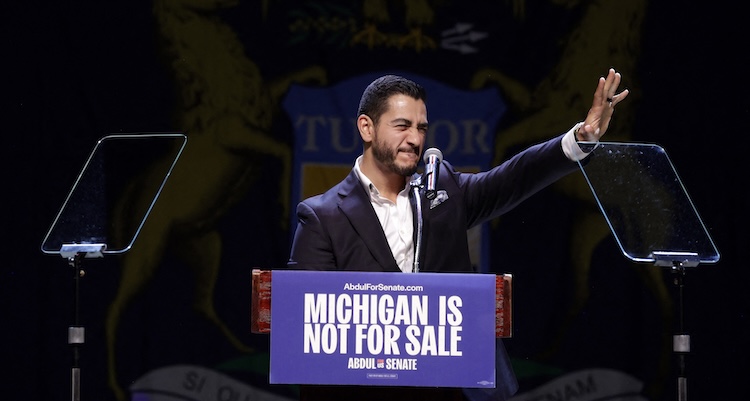
There’s no comfort at all in the fact that Abdul El-Sayed’s defeat of Haley Stevens last night came down to the wire. However close the race, it gave Michigan a Democratic nominee for the U.S. Senate who’s outspokenly anti-American and sympathetic to our terrorist enemies. In some ways, tight races can be more painful than blowouts because they torment those on the losing side with a lingering sense of what could have been. And we’re way past what could have been.
Those of us who love this country must direct our attention to what is, no matter how distressing. This is an auspicious year in more ways than one. It’s the country’s 250th birthday, and we’re approaching the 25th anniversary of the 9/11 attacks. And yet the U.S., at home and abroad, is buckling under assault from radical Islam.
El-Sayed’s nomination notches another victory for the ascendant socialist-Islamist political movement trying to remake the republic. In New York City, Zohran Mamdani established the template and has lifted up assorted DSA congressional nominees in his wake. Among others around the country, there’s New Jersey’s Democratic congressional nominee Adam Hamawy, whose work history includes a stint with an al-Qaeda front group. The Democrats’ nominee for U.S. Congress in Colorado, Milat Kiros, doesn’t believe that a deadly firebombing targeting Jews is anti-Semitic. All these rising political stars and others are on record defaming the United States or Israel or Zionists (usually all three), and many are directly tied to repulsive figures such as Hasan Piker or are in proximity to individuals and groups with more direct links to terrorism.
Let’s not forget the pre-Mamdani Democrats who are caving, one after another, to the radicals, their purity tests, and their destructive agenda.
At the same time, the Iranian regime—the world’s leading exporter of Islamic terrorism—has seemingly done the unthinkable and stopped the mighty American military in its tracks. While the regime holds the Strait of Hormuz hostage, the U.S. is reckoning with a shortage of defensive munitions and perhaps long-range missiles as well. Given that there is no political will for the deployment of American ground troops in Iran, the president is drifting from one false peace offer to another as Iran continues its assault on ships and American allies in the region.
And the Islamists’ fight for Western hearts and minds is also going gangbusters. Along with their allies in China and Russia, they managed to capture the battlefield of social media without facing the slightest opposition. Foreign bot armies have flooded platforms like X and TikTok with endless anti-American and anti-Semitic propaganda and amplified the voices of our internal enemies as well. This has been especially effective at turning younger Americans against the U.S. and Israel. In an article on information warfare at Mosaic, Eliana Aiken writes, “Generation Z spends an average of five hours a day on social media, nearly a full workday.” Which means that Gen Z is being babysat by our adversaries.
All of this is to say that in the year of America’s Semiquincentennial and the 25th anniversary of 9/11, we are being called upon to fight for our country once again. This strikes me as propitious. Patriotism is not supposed to be an exercise in nostalgia but a persistent expression of love for country and a commitment to its vigilant defense. We can defeat Islamists at the ballot box. The U.S. armed forces can of course triumph over the Iranian regime. And we can repel the information assault from abroad. But we must commit to doing these things—to voting, arming, building, and defending what we love. As the Bicentennial is remembered for the procession of the tall ships and the popular commemoration of the Founding, let this year be remembered for our recommitment to the fight.
Abe Greenwald is the executive editor of COMMENTARY. |